AI SDRs in 2026: What Sales Teams Actually Need to Know
Key Takeaways
- Hybrid teams (AI + human) generate $61,200/month in revenue versus $9,300 for AI-only and $24,500 for human-only[4]
- AI SDR tools have a 50-70% annual churn rate, with most buyers failing to achieve expected results
- AI-booked meetings convert to opportunities at 15% versus 25% for human-booked, a 40% quality gap
- The winning model is AI for research and data, humans for relationships and closing
- Signal-based outreach achieves 15-25% reply rates versus 1-5% for generic cold outreach
Table of Contents
Eighty-seven percent of sales organizations now use some form of AI.[1] Vendors promise 24/7 prospecting, 70% cost reduction, and 4-7x conversion rates. Yet behind the pitch decks, 50-70% of AI SDR customers churn annually, and practitioners report spending more time babysitting AI outputs than they saved.
This guide cuts through the noise. Based on independent performance data, analyst research from Gartner and Forrester, and real practitioner experience, here is what actually works, what does not, and how the best sales teams are using AI in 2026.
Last Updated: March 2026
What Is an AI SDR?
An AI SDR (Sales Development Representative) is software that automates prospecting tasks traditionally handled by human sales reps. These tools use machine learning and natural language processing to identify prospects, personalize outreach emails, manage follow-up sequences, qualify inbound leads, and schedule meetings.
The term covers a wide spectrum. On one end, fully autonomous AI SDRs like those from 11x and Artisan attempt to replace the human SDR entirely. On the other, AI-assisted tools augment human reps by handling research, data enrichment, and draft writing while leaving the actual outreach to people.
What is an AI BDR? An AI BDR (Business Development Representative) is functionally similar but typically focuses on outbound prospecting and new business generation rather than inbound lead qualification. In practice, most vendors use the terms interchangeably.
The market is growing fast. The AI SDR space is estimated at $4.1-4.3 billion in 2025, with MarketsandMarkets projecting $15 billion by 2030 at a 29.5% CAGR.[9]
What Do AI SDR Vendors Promise?
The pitch is compelling. Vendors claim AI SDRs operate around the clock, contact 1,000+ prospects daily (versus 30-80 for a human), respond to inbound leads in under 60 seconds, and cost a fraction of a fully-loaded human SDR hire.
Specific vendor claims:
- 11x (Alice): Each digital worker "replaces 11 full-time employees." Fully autonomous outbound.
- Artisan (Ava): Automates "80% of outbound sales workflow" with access to 300M+ contacts.
- Landbase: 4-7x conversion rates from lead to meeting versus traditional outbound.
- Salesforce Agentforce: Autonomous AI agent embedded in the CRM, focused on inbound pipeline.
The cost math
A fully-loaded human SDR costs $98,000-$175,000 per year when you factor in salary ($50-70K base), variable comp ($83-85K OTE), benefits, tech stack, management overhead, recruiting, and ramp time. Mid-market AI SDR tools run $6,000-$11,000 per year. Enterprise platforms like 11x and Regie.ai cost $18,000-$60,000 per year, still well under a single human hire.
But cost per seat is not the right metric. The question is cost per result.
What Do Practitioners Actually Report?
The gap between vendor demos and real-world performance is the defining story of AI SDRs in 2026.
The personalization problem
Generic-sounding outreach is the most consistent complaint. MarketBetter's aggregation of 11x reviews found that "the most consistent complaint across every review platform: Alice's outreach doesn't feel personal enough. Users report that despite providing detailed ICP information and brand guidelines, the output reads like generic AI-generated email."[2]
On Reddit's r/sales, practitioners are blunt. Reviews of Artisan include descriptions like "Mad Libs with a logo" and G2 reviews describe "super poor quality emails... overpromising and underdelivering." One user reported sending approximately 1,400 emails through the platform with zero responses.
The babysitting problem
Tools that promise to save time often create new work. Jason Lemkin of SaaStr, who ran one of the most detailed public AI SDR experiments, described the reality: "It took 6 weeks of daily training to get an AI SDR tool performing at the level of our top human SDRs. Six. Weeks. We had to feed it 50+ examples of emails that actually got responses... They went through 200+ iterations before they got to 'Let's Go' status. Most teams give up after iteration #3."[3]
His team's experiment required 15-20 hours per week from two people for agent management. A bug in the system went undetected for four months. When he shared a VP of Sales interaction: "They hadn't reviewed a single AI-generated email in 3 weeks. Turns out the tool was sending prospects emails about 'revolutionizing their blockchain strategy' for a company that sells accounting software."
Matthew Metros, writing in February 2026, reinforced this: "AI requires a babysitter. Always. I have heard of founders whose bots were sending completely wrong information for weeks before anyone caught it. Asking for January meetings in February. Referencing the wrong company name."
The excitement-to-regret curve
There is a consistent pattern: excitement peaks in month one, disappointment sets in by month three. AiSDR's own industry data found 70-80% of customers churn after three months. Coldreach's analysis found "most users fell into two camps: early excitement that fades within 30-60 days, and frustration around quality, control, and results."
One Reddit user's assessment captures the consensus: "Pretty much all hype... The problem with all the AI SDR startups was that they tried to automate the entire workflow, which they did poorly."
What Does the Independent Data Show?
Vendor claims deserve skepticism. Independent head-to-head comparisons tell a more nuanced story.
The AI Agenix experiment
One of the few truly independent comparisons ran from July 2025 to January 2026, covering 38,000 outreach attempts with a $15,000 budget. The human SDR generated $147,000 in revenue versus AI's $56,000, a 2.6x revenue gap. Human SDRs achieved a 71% meeting show rate versus AI's 52%.[6]
AI was 54x cheaper per unit of activity. The key finding: "The agents are better than a mid-pack AE or SDR or BDR. They're not better than your best performers."
The SaaStr experiment
SaaStr's eight-month experiment generated $4.8M in additional pipeline and $2.4M in closed-won revenue from AI agents. The AI sent 3,221 emails per month versus human SDRs' 75-285. Outbound response rates reached 6.7% (double the industry average), with warm segments hitting 10-12%.[3]
But the caveats matter. SaaStr is a well-known brand, so this was warm outbound, not true cold outreach. The experiment needed 47 iterations to tune the sponsor outreach agent. And it required consistent human oversight.
Hybrid versus pure approaches
The most compelling data comes from Leads at Scale's March 2026 compilation:[4]
| Metric | AI-Only | Human-Only | Hybrid |
|---|---|---|---|
| Monthly revenue | $9,300 | $24,500 | $61,200 |
| Meetings booked/month | 29 | 56 | 117 |
| Meeting show rate | 40-60% | 70-85% | 70-85% |
| Meeting-to-opportunity | 10-15% | 25-40% | 25-40% |
Companies using AI to augment rather than replace human SDRs see 2.8x more pipeline than those attempting full replacement. Hybrid teams achieve 35% higher close rates, 43% higher win rates, and 37% faster sales cycles.
The pattern is clear: AI multiplies human effectiveness but cannot replicate it.
Where Does AI Actually Help Sales Teams?
AI is not failing everywhere. It is failing at the specific task vendors are selling hardest: autonomous outreach. Where it excels is behind the scenes.
Speed-to-lead
Responding to an inbound lead within one minute boosts conversion by 391%. Contacting within five minutes is 100x more effective than waiting 30 minutes. Average human response time is 2-42 hours. AI responds in under 60 seconds. This is where AI delivers immediate, measurable ROI.
Conversation intelligence
Gartner's 2025 Magic Quadrant Leader Gong reports 12-18% improvement in win rates and 25-30% reduction in forecast variance among customers. Sellers using AI to guide deals see 35% higher win rates.[5] Call recording, transcription, and insight extraction is a mature AI use case that works.
Data enrichment
Clay, which raised $100M at a $3.1B valuation in 2025 and has 10,000+ customers, connects to 150+ data sources with waterfall enrichment. Their OpenAI partnership doubled enrichment coverage from around 40% to above 80%. Rippling reported 3x enrichment rates. This is AI doing research at scale, not pretending to be a human.
Platforms like Data Surfer take this further by combining real-time contact enrichment with AI-powered company research that produces cited insights and confidence scores. Rather than just returning raw data, the AI researches each company against your ICP and explains why it fits or does not, giving reps the context they need to personalize outreach without hours of manual research.
Intent signal monitoring
Ninety-six percent of B2B marketers report success with intent data, yet only 25% of companies currently leverage it. Signal-based personalized outreach achieves 15-25% reply rates versus 1-5% for generic cold outreach. The first vendor to contact a buyer in their research phase wins approximately 80% of deals.
Data Surfer's signal monitoring works this way: it scans company blogs, social profiles, career pages, and key contacts' social accounts, then generates specific engagement recommendations based on what it finds. A new VP hire, a competitor mention, a product launch post all become touchpoints with suggested actions and talking points, rather than generic "just checking in" emails.
CRM hygiene and admin automation
AI handles administrative tasks with 99.2% accuracy. Automated account research reduced prep time from 3 hours to 15 minutes at Analytic Partners, driving 40% pipeline growth. This is the kind of unglamorous work where AI reliably delivers value.
Why Is Data Quality the Real Bottleneck?
Most AI SDR failures trace back to the same root cause: bad data. The AI itself may function correctly, but it is operating on a foundation of outdated contacts, inaccurate emails, and incomplete CRM records.
B2B contact data decays at 2.1% per month, roughly 22.5% annually. In tech startups, the rate hits 30-40%. Twenty-five percent of B2B email addresses go invalid each year, and 30% of employees switch jobs annually.
CRM data is worse than you think
Validity's 2025 survey of 602 CRM users found 76% of organizations say less than half their CRM data is accurate and complete. Forty-five percent of companies' CRM data is not prepared for AI. And 37% of staff regularly fabricate CRM data to tell leaders what they want to hear.[7]
Contact data accuracy varies widely
| Provider | Claimed Accuracy | User-Reported Accuracy |
|---|---|---|
| ZoomInfo | 90-98% | 50-72% |
| Apollo | Not specified | 65-80% (30-35% bounce rates) |
| Cognism | 85%+ overall | 85% (98% phone-verified) |
| Waterfall (multi-source) | N/A | 95%+ |
At scale, deliverability collapses
Organizations sending 1M+ emails monthly face inbox placement below 28%, a 22-point year-over-year drop.[12] New domains achieve only ~55% inbox placement versus ~85% for mature domains. Gmail and Yahoo's 2024+ rules require spam complaints under 0.3% and hard bounces under 0.5%.
Cautionary case study: A Series B SaaS company booked 47 meetings in four months with an AI SDR, but only 4 converted to opportunities, and their primary domain sender score crashed from 95 to 72.
The financial impact of poor data quality is massive. IBM estimates it costs U.S. businesses $3.1 trillion annually. Gartner puts the per-organization cost at $12.9-$15 million per year. And 85% of AI projects fail, with data quality causing 70% of those failures.
Before investing in any AI SDR tool, audit your data. Clean your CRM. Verify your contact lists. The tool is only as good as what you feed it.
Will AI Replace SDRs?
The short answer: no, not in 2026. But it is reshaping the role.
Thirty-six percent of B2B companies cut SDR/BDR headcount in 2025, the highest reduction rate among all sales roles, according to Emergence Capital's survey of 560+ venture-backed software companies. Only 19% increased SDR headcount, the lowest growth rate of any sales function.[8]
But full replacement remains rare. Only 22% of sales teams have fully replaced SDRs with AI; 55% are still piloting augmented workflows. Entry-level hiring rates dropped 73.4% in the past year, suggesting the entry point into sales is narrowing, not disappearing entirely.
A February 2026 NBER study of 6,000 CEOs found approximately 90% of firms report zero measurable impact on either employment or productivity from AI, suggesting impacts are concentrated in specific roles and companies rather than broadly distributed.[11]
The SDR role is bifurcating
Two career tracks are emerging:
Human-skills specialist
Cold calling, complex stakeholder conversations, relationship building, leading to an AE track. These are the reps who thrive on the phone, navigate multi-threaded deals, and build genuine rapport.
GTM Engineer
Builds automated prospecting systems using tools like Clay, Data Surfer, n8n, and Make. One GTM Engineer can produce more qualified leads than five manual SDRs. Potential earnings reach $250K+ according to industry leaders.
Complex sales remain human territory
Gartner predicts 75% of B2B buyers will prefer sales experiences that prioritize human interaction over AI by 2030.[5] Multi-stakeholder deals average 10-11 stakeholders. Human-booked meetings show 70-85% attendance rates versus 40-60% for AI-booked.
The deal size threshold is clear: AI SDRs work well for ACV under $25K. For deals above $50K with 5+ stakeholders, human SDRs significantly outperform. Enterprise sales ($100K+) remains firmly human-led territory.
"Gartner VP Analyst Melissa Hilbert: "AI agents are everywhere, but there's a value ceiling. Beyond a certain point, more AI does not mean more productivity. In fact, layering additional prompts and tools onto already complex workflows risks overwhelming sellers and accelerating burnout."
How Should You Evaluate AI SDR Tools?
Questions to ask vendors
- What are your data sources? Single-database tools are limited. Look for waterfall enrichment across multiple providers.
- What are real customer churn rates? If they will not answer, that tells you something.
- What human oversight is required? Any vendor claiming zero oversight is either lying or setting you up for domain reputation damage.
- Can I see results from companies similar to mine? A case study from a well-known brand does not predict results for an unknown startup doing true cold outreach.
- What happens to my domain reputation? Ask about deliverability monitoring, sending limits, and domain warming protocols.
- What is the real time-to-value? Expect 3-6 months with clean data, 6-9 months if building from scratch.
Red flags
- Promises of full automation with no human-in-the-loop
- No published pricing (usually means enterprise pricing for mid-market features)
- Conversion claims based only on their own customers' data
- Annual contracts with no trial period for a tool category with 50-70% churn
- "Activate in under 2 minutes" messaging
What to look for
- Transparent pricing and flexible contract terms
- Built-in data verification and bounce protection
- Sending limits and domain health monitoring
- CRM integration depth (not just a basic sync)
- Human-in-the-loop workflows where you can review before sending
AI SDR pricing overview
| Tier | Monthly Cost | Examples |
|---|---|---|
| Budget tools | $25-$200/mo | Instantly, SalesHandy, Data Surfer (from $31/mo), Salesforce (basic) |
| Mid-market | $49-$900/mo | Apollo, AiSDR, Reply.io |
| Visitor ID + outbound | $99-$3,000/mo | Warmly, Unify GTM |
| Enterprise AI SDRs | $1,500-$5,000/mo | 11x, Artisan, Regie.ai |
HubSpot's Breeze Prospecting Agent is embedded in existing Sales Hub tiers (Professional at $100/user/month), making it accessible if you are already in the HubSpot ecosystem. Salesforce Agentforce runs $125-$150/user/month as a standard add-on.
The Hybrid Model: AI + Humans Together
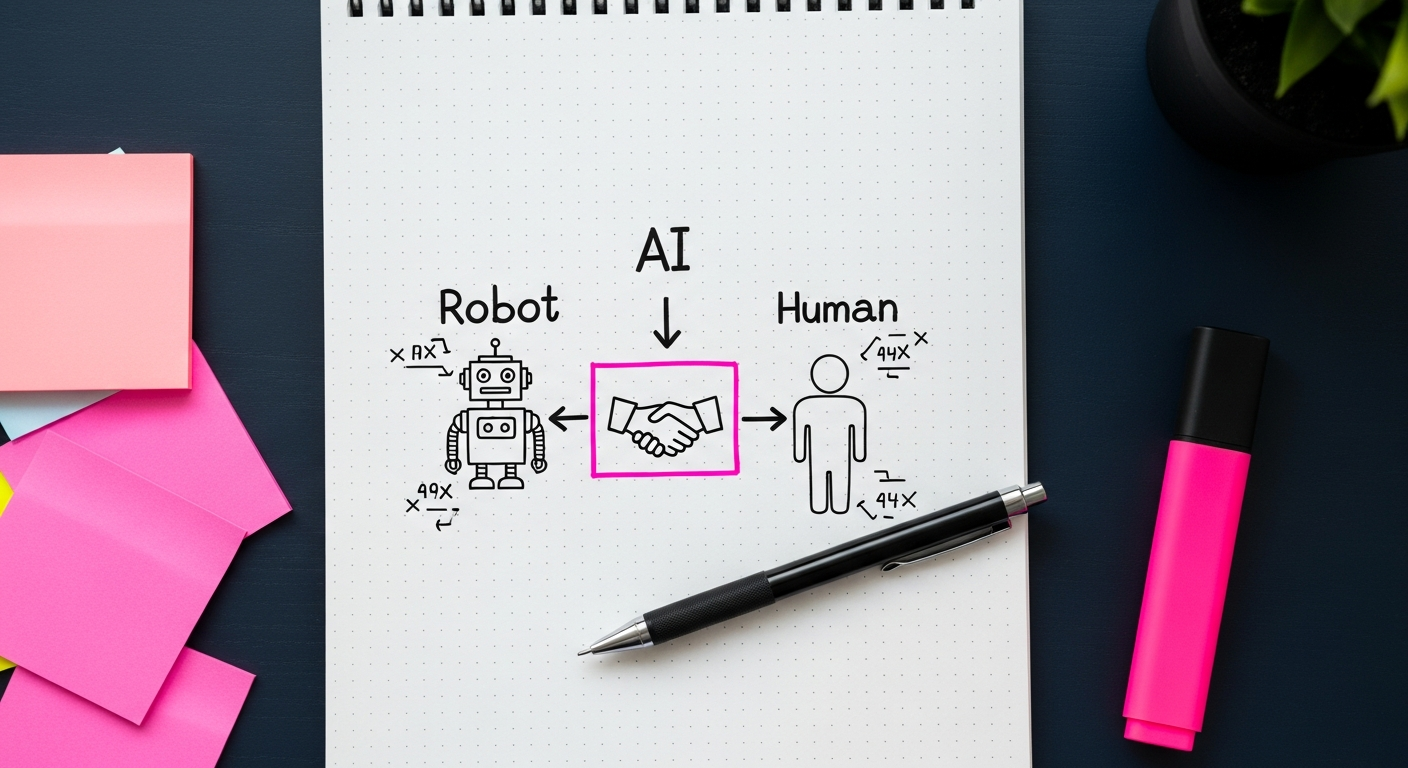
The data points in one direction: neither all-AI nor all-human is optimal. The teams generating the most pipeline in 2026 use a hybrid model where AI and humans each do what they do best.
AI handles:
- Prospect research and company intelligence
- Data enrichment across multiple sources
- Intent signal monitoring (job changes, hiring patterns, funding rounds)
- Lead scoring and prioritization
- CRM data entry and hygiene
- Initial inbound response and qualification
- Meeting scheduling and follow-up reminders
Humans handle:
- Personalized outreach based on AI-gathered intelligence
- Phone conversations and complex discovery calls
- Relationship building across buying committees
- Strategic account planning
- Navigating objections and negotiations
- Multi-threaded engagement with 5+ stakeholders
- Closing
"The AI doesn't need to write the email for you; it provides the fuel for a human to write a compelling one."
The lower-volume, higher-quality approach is winning. Small targeted campaigns of 50 or fewer recipients achieve 5.8% response rates versus 2.1% for larger lists. Signal-based outreach with specific event triggers and value propositions achieves 15-25% reply rates. Only 5% of senders personalize every email, but those who do get 2-3x better results.
This is the approach Data Surfer was built around: AI handles the company research, ICP scoring, contact discovery, and signal monitoring, then generates specific engagement recommendations with context. The human rep reviews the intelligence, picks the right moment, and writes the actual message. No AI pretending to be a person. No 5,000-email blasts. Just well-timed, well-informed conversations.
The math works out: 25 highly targeted, signal-informed touches per day will outperform 5,000 AI-generated emails. Every time.
Frequently Asked Questions
The Bottom Line
AI is transforming sales development, but the transformation is augmentation, not replacement. The vendors selling "set it and forget it" autonomous SDRs are overpromising. The 50-70% churn rate proves it.
The teams winning in 2026 are not choosing between AI and humans. They are using AI to make their human reps dramatically more effective: better researched, faster to respond, focused on the highest-intent prospects, and armed with signals that tell them exactly when and how to engage.
Forrester warned that ungoverned AI use will lead to more than $10 billion in enterprise value losses.[10] McKinsey found only 6% of companies qualify as "AI high performers." The difference is not which AI tool you buy. It is whether you build the systems, data foundation, and human oversight to use AI intelligently.
Start with your data. Clean your CRM. Implement signal monitoring. Use AI for research and enrichment. And keep your best people doing what AI cannot: building trust, navigating complexity, and closing deals that matter. If you want to see the hybrid model in practice, Data Surfer was purpose-built for exactly this workflow.
References
- [1]Salesforce State of Sales Report 2025
- [2]MarketBetter - 11x AI SDR Review Aggregation
- [3]SaaStr - AI SDR Experiment Results
- [4]Leads at Scale - AI vs Human SDR Comparison (March 2026)
- [5]Gartner - B2B Buyer Preferences 2025
- [6]AI Agenix - Independent AI SDR vs Human SDR Experiment
- [7]Validity - CRM Data Quality Survey 2025
- [8]Emergence Capital - SDR Headcount Survey 2025
- [9]MarketsandMarkets - AI SDR Market Forecast
- [10]Forrester - Ungoverned AI Risk Assessment
- [11]NBER - CEO Survey on AI Employment Impact (February 2026)
- [12]The Digital Bloom - Email Deliverability Report 2025
Backed by startup programs from